

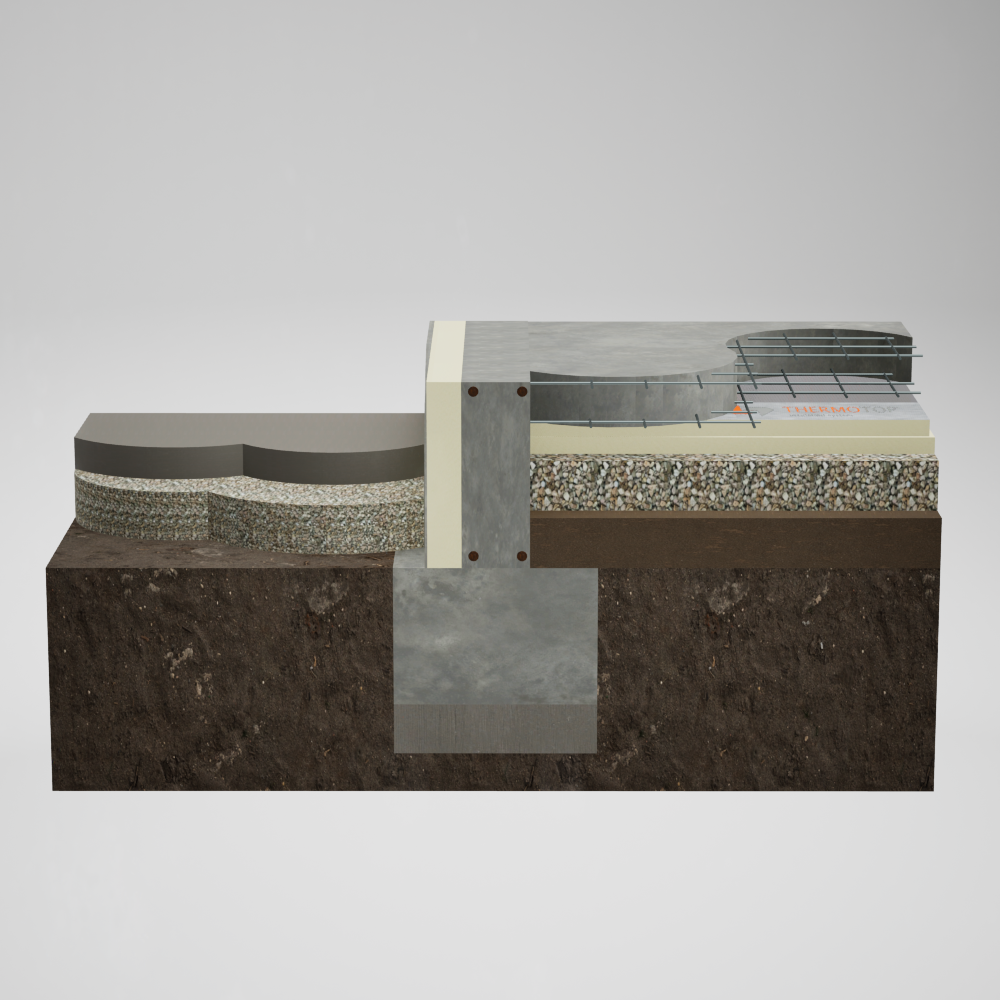
Insulation under the concrete slab and foundation
Up to 15% of a building’s energy losses occur through the foundation and concrete slab. Increase the energy efficiency of your house and eliminate heat loss with THERMOTOP PIR boards.
THERMOTOP PIR boards stand out due to:
 Very low conductivity coefficient (λ=0,021 W/mk)
 High dimensional stability (does not settle, does not contract, and maintains its thermal properties long-term)
 High compressive strength, between ≤ 130 kPa and ≥ 170kPa
 Do not allow moisture penetration
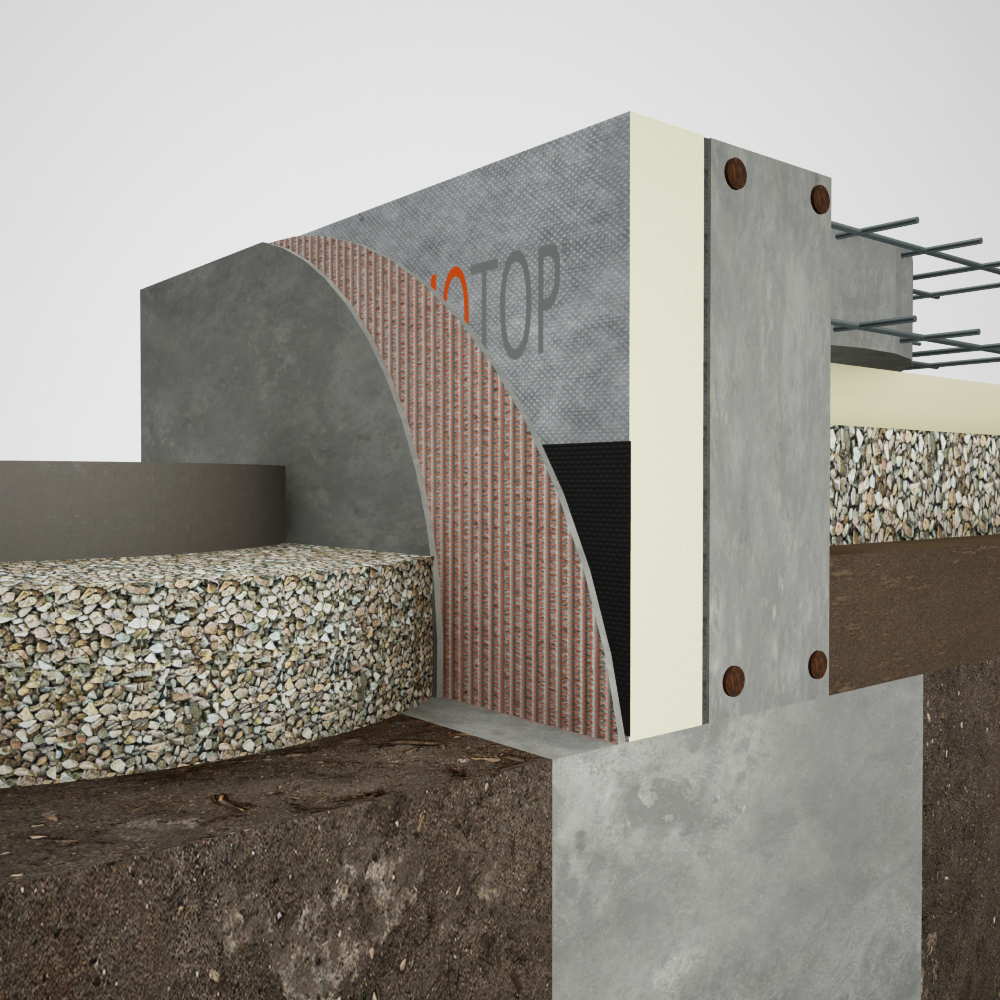
 Eliminate thermal bridges due to the "L" type joint
 Increase the lifespan of the construction elements in which they are used
Download documents
Up to 15% of a building’s energy losses occur through the foundation and concrete slab.
Increase the energy efficiency of your house and eliminate heat loss with THERMOTOP PIR boards, a high-performance solution that combines superior thermal insulation with high compressive strength.
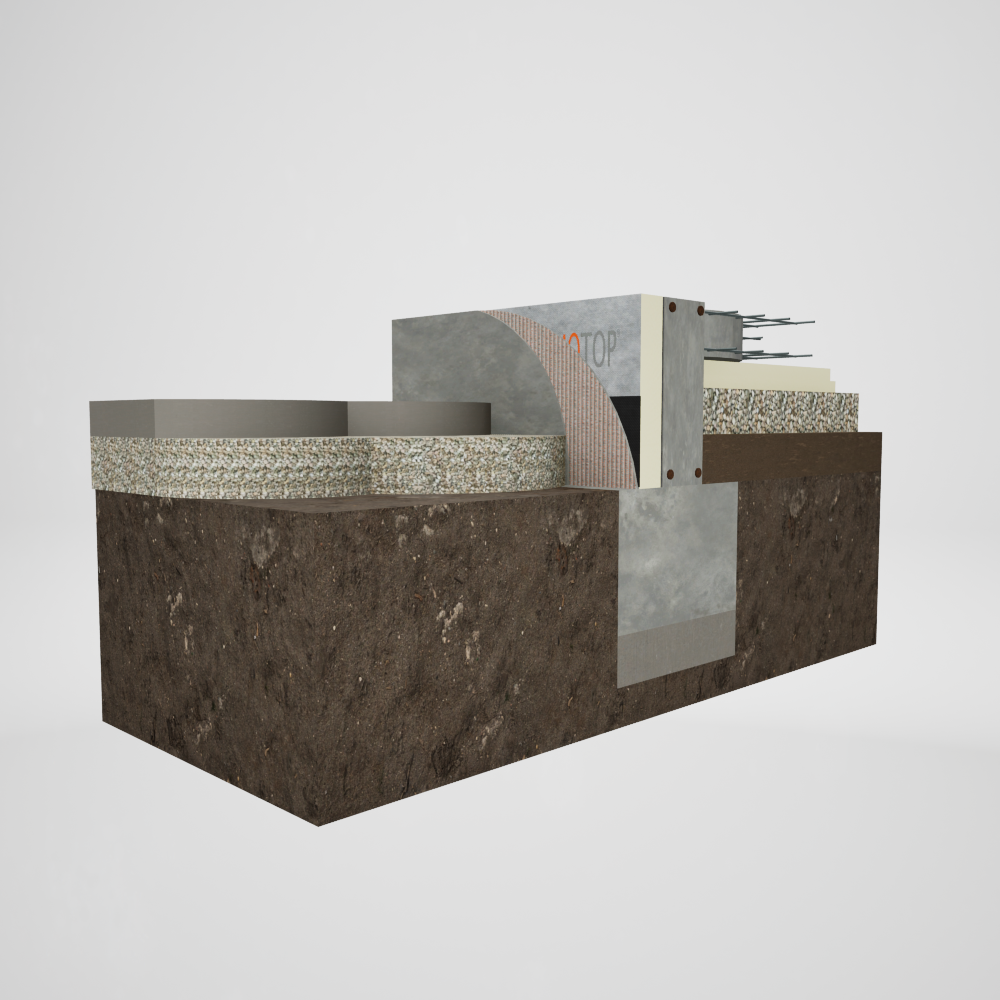
Thermal insulation applications under the concrete slab and foundation
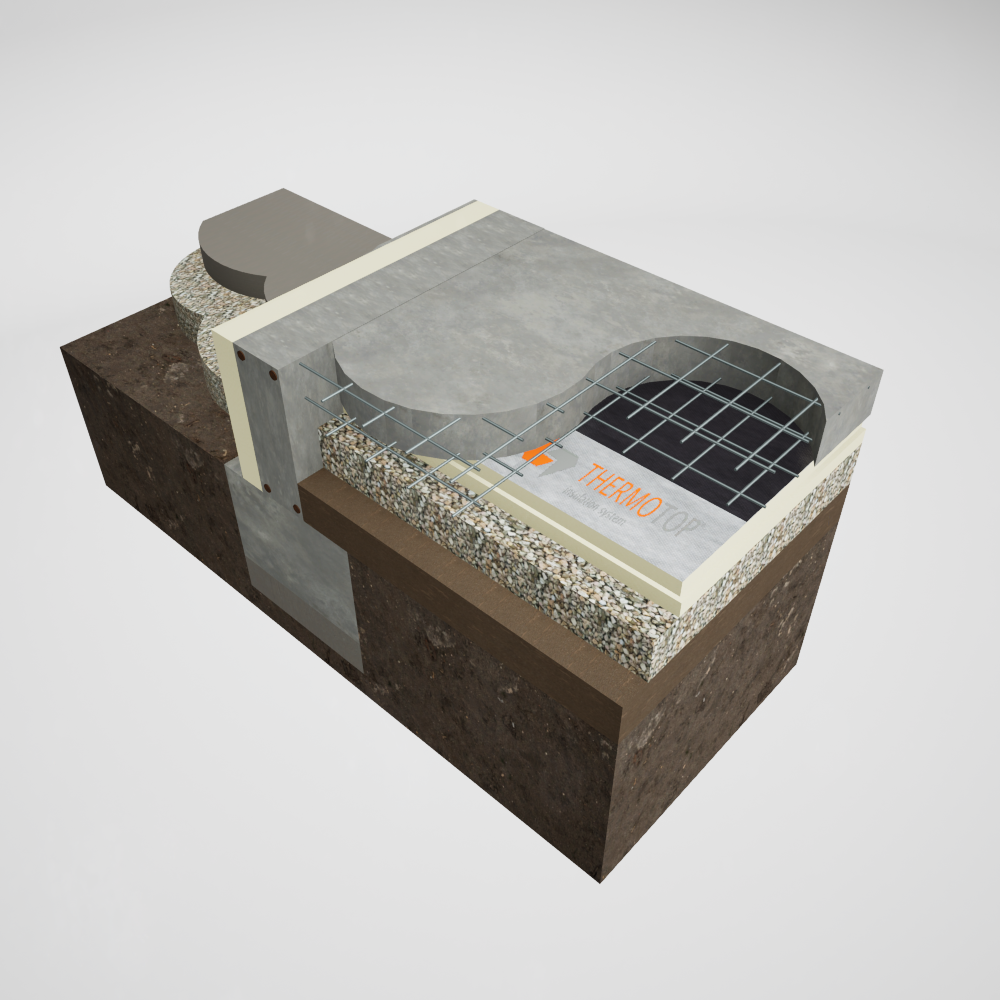
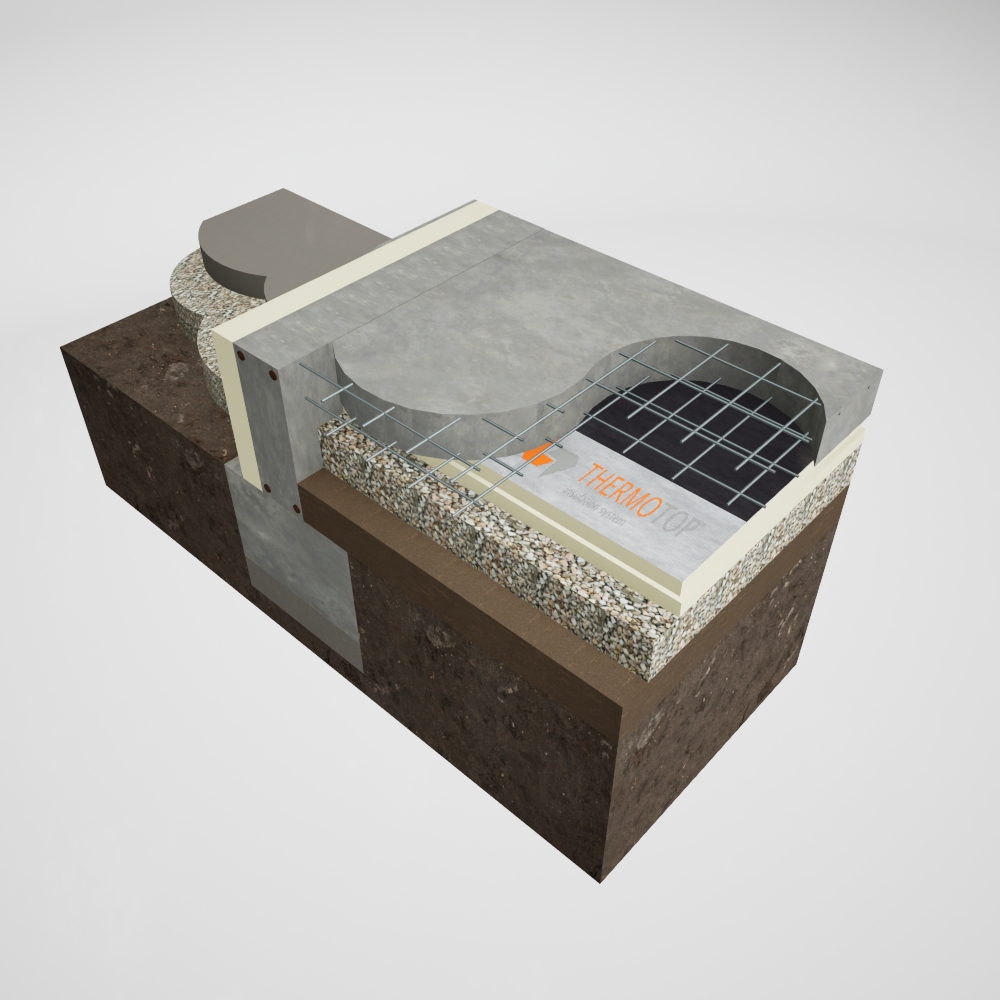
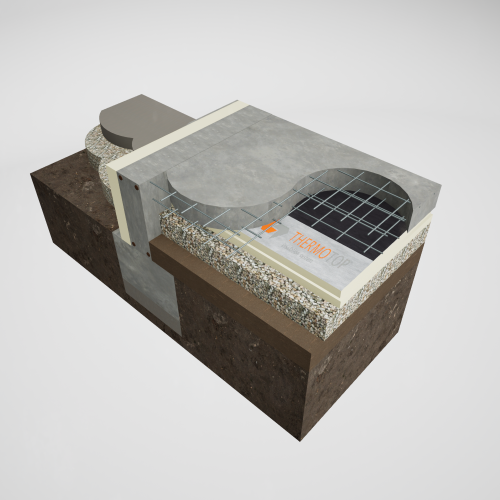
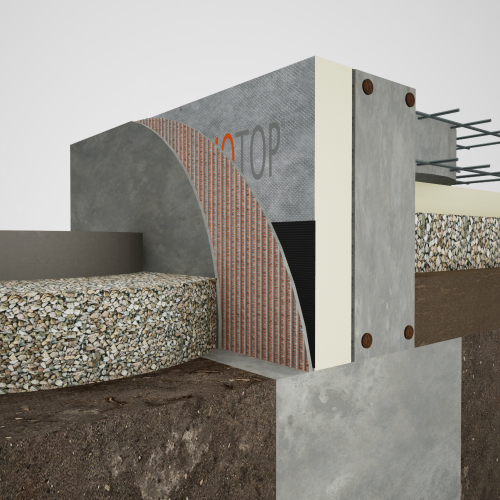
Construction elements in thermal insulation under the concrete slab
- Natural ground
- Compacted ground
- Capillary break layer
- Thermal insulation: THERMOTOP DV
- Polyethylene foil
- Reinforced concrete slab
Image gallery for insulation under the concrete slab
Compatible THERMOTOP PIR boards
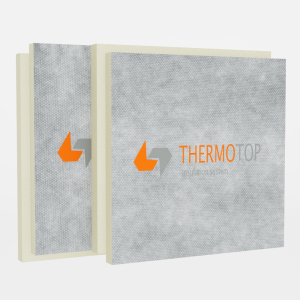
THERMOTOP DV
7,50 €THERMOTOP DV is a PIR thermal insulation board covered on both sides with a membrane for controlled water vapor diffusion.
Discover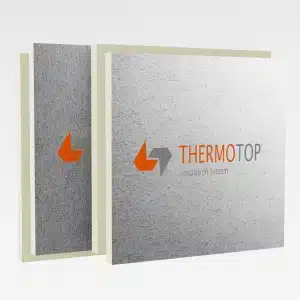
THERMOTOP AL
7,50 €THERMOTOP AL is a thermal insulation board made of PIR foam, covered on both sides with aluminum foil.
Discover
THERMOTOP KP
7,50 €THERMOTOP KP is a thermal insulation board made of PIR foam, covered on both sides with 80g/m2 Kraft paper.
Discover
THERMOTOP FG
7,50 €THERMOTOP FG is a thermal insulation board made of PIR (polyisocyanuric) foam, covered on both sides with a mineral-coated fiberglass membrane
Discover
THERMOTOP PIR boards for pitched roofs
THERMOTOP DV
7,50 €THERMOTOP DV is a PIR thermal insulation board covered on both sides with a membrane for controlled water vapor diffusion.
DiscoverTHERMOTOP AL
7,50 €THERMOTOP AL is a thermal insulation board made of PIR foam, covered on both sides with aluminum foil.
DiscoverTHERMOTOP KP
7,50 €THERMOTOP KP is a thermal insulation board made of PIR foam, covered on both sides with 80g/m2 Kraft paper.
DiscoverTHERMOTOP FG
7,50 €THERMOTOP FG is a thermal insulation board made of PIR (polyisocyanuric) foam, covered on both sides with a mineral-coated fiberglass membrane
Discover
ADVANTAGES OF THERMOTOP PIR BOARDS

Optimization of overall construction costs

Reduction of long-term operating costs

Maximization of usable space

Quick installation and reduced material losses
Durability for decades